Monday, 2 November 2015

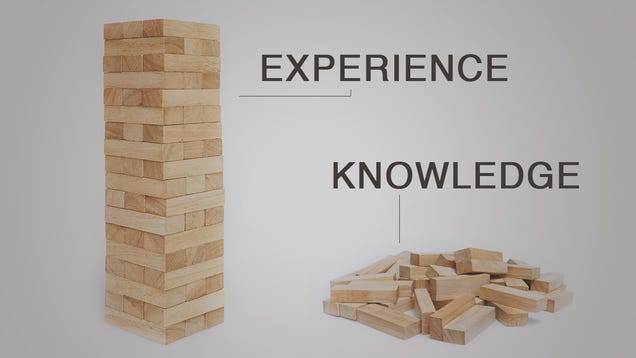
The conflict of knowledge


Learning is a part of life. A part that many people are bound to go through at one point or another and to be honest there is a beauty in the acquisition of knowledge that makes life worth living. From the simple act of learning how to speak as a baby to the advanced stages of stringing notes together to create music or complex formulas, the process can be something to be admired. In our society it also proves to be something quite revered. But what happens when one takes it upon themselves and thinks they have acquired all there is to know?


In a recent article I read about a study that was conducted where it was proven that people who viewed themselves as experts in a specific field became close-minded. It was also hinted that these same people were vulnerable to overstating the knowledge they had. How very curious this is, especially when you consider that these people are the ones who should ‘know better’.

It isn’t uncommon for those with the expertise and knowledge that the majority do not have to often be associated with being arrogant and I wonder if this might not be the case and if so why is it that people find the need to put forth an image of such a polished and perfect nature? What drives them to such extremes that it corners their minds to the point where it closes off from reason? Truthfully I think the answer lies in the value that society has placed on the knowledge. After all, the saying does ring pretty clearly; knowledge is power.


And therein lay the crux of the problem for these people who boast more knowledge than they likely have. The belief that they have attained enough knowledge seems to give them a perceived power over the next person, or at least that is what society has raised them to believe. So sure are they in their expertise and influence that they have become close-minded in thinking outside the box. Which is very ironic when you consider the fact that such creative and out of bounds thinking is what advances knowledge in the first place, something the article goes on to state further.

It can’t be denied that knowledge is the foundation of our society as it builds and transforms it on a near constant basis. However, it cannot be forgotten that this precious resource can be relatively flexible as it changes and evolves along with those whom it inspires and that which was once known yesterday can be just as easily forgotten today as things not know before can be discovered. Because of this it should always be considered that nothing is ever truly known, regardless of expertise or assumed knowledge.

Taking into consideration all this, it makes sense to keep an open mind and a dampened ego when approaching the advancement of knowledge. That way the value society has so richly placed on this resource can be just as richly earned and safely kept without any fear of it being questioned or its returns diminished.

Friday, 11 September 2015

Thinking Rational - Teens prove economic prowess in new study


If there’s one thing many people tend to agree on it’s that we all think teenagers are these little pre -pubescent creatures struggling to slither from their shells as they get thrown into this expanding world of endless discovery and rarely does anyone ever willingly admit to being one of those creatures once upon a time. But the truth is we were all there in our reckless little worlds, but one has to question whether we were as reckless as the general population likes to perceive?


In a recent study done in Duke University it was proven that when it comes to monetary issues at least, teenagers can be far more rational than society has given them credit for. The study went on to show how analytical a group of young people where when faced with three situations, of which they had to pick the best one. Each scenario consisted of an opportunity of winning or losing some money.


For example, if a teen picked scenario A, they had a one-third chance of winning possibly $6, one-third chance of winning $4, and a one-third chance of losing $4. Scenarios B and C carried similar rulings to win or lose three different dollar amounts.

The young adults, aged 22 years old on average, approached the task with relatively simple rules in mind. As they completed more trials they opted to go for wins then losses as they chose the scenario with the most wins, completely ignoring the money aspect.

However, as the teenagers went for the scenarios the first thing they seemed to focus on was the magnitude of the potential win or loss and thus they ended up choosing a scenario that minimized their monetary loss.


“I was surprised by how consistent the effects were,” Scott Huettel, a professor of psychology and neuroscience at Duke was even quoted as saying, “Pretty much everywhere we looked, adolescents were the ones who looked more economically rational.”

It would seem that the young are far more advanced in their thinking than they are given credit for yet somehow society still seems to keep them labelled as the reckless ones. It begs the question of whether or not we have moved past the point of making assumptions based on old principles born from old cultures long dead.


What is it that makes teenagers so much more able to stay rational where young adults fail to do so? The answer could probably be found in a different, possibly in more detailed study that tells us a more curious fact about our pre-pubescent money hoarders as it has their brains mapped and compared to that of an adult.

In the study the teens and adults were asked how they would react to certain situations and then their brains were imaged as they responded. The researchers found that though responses were similar between the two groups, the brain activity differed, specifically the medial prefrontal cortex was much more active in the adults then it was in the teenagers. The teens did however, have much more activity in their superior temporal sulcus, the part of the brain that involved prediction of future actions based on previous experience.


Basically the teenagers were faced with a far simpler question that they put to themselves than that of their older companions had as they executed their judgement. While the adults considered not only themselves but those around them, you had the teenager only considering themselves. Taking this phenomenon into account it begins to make sense how teenagers are capable of being as rational as you find simplicity in the way their thinking is processed. But can it be said for all teenagers?

Who knows, what is known is that this selfish kind of thinking doesn’t seem to last for long as the young mind matures into that of a young adult’s mind and the idea of thinking about others comes into play. Whether it’s a good thing or a bad thing depends on the individual.

Thursday, 20 August 2015

E-Cigarettes: New Spin on Old Habits


Just like the flip phone phased out into the smart phones we all know and love today, it would seem that smoking has moved in a similar direction, or has it? E-cigarettes, a relatively new-ish thing that has garnered a lot of popularity in the younger peoples these days seems to be making the rounds as people learn to love it, or hate it. But I can’t blame them as I read up more about the new [to me, at least] fad that seems to be the in thing.


As I understand it, e-cigarettes hail from the lovely land of the Chinese and are battery powered and sold with ‘refillable’ flavours as well as nicotine. Of course I’m guessing the attraction for the youth must be those flavours and I wonder what exactly is in that. According to researchers who took the time to study 30 e-cig liquids, taken from a number of different companies including the major manufacturers NJoy and Blu the study which contained a variety of flavours such as tobacco, menthol, cotton candy, bubble-gum, chocolate and other fruit flavours, it showed a number of chemicals which could potentially cause harm. The trouble it would seem that though the substance was safe in quantity, it wasn’t necessarily known whether it was really okay to directly inhale the stuff without consequence. Comforting thought that. 


Still I doubt that many kids care much about the science behind the fact that the thing lights up like a real cigarette while you use it and emits a cool white smoke you can make circles and other shapes with. You know, the real things to get excited about. Well, that and maybe the fact that e-cigs technically allow them to give the finger to the man as they ‘fall through the cracks of the law’. Considering that there barely exists any law against the electronic annoyance, you can be sure that many will take advantage of this as they stray from the old tobacco stick to the new shiny and improved one. Suddenly it becomes a question of conscience whether to ‘light up’ or not.


But is it okay for our youth to be puffing away?

In a recent article I read, a certain government body stated that ‘vaping’ is safer than smoking and this could lead to the end of traditional smoking. They go so far as to even want to get e-cigs licensed as a medicine and dispense it as such amongst the average consumer as a prescribed medication for quitting smoking. Yet in another article I read a conflicting argument is made, one I find myself agreeing with far more than the idea of making e-cigs so readily available.


The article in question states that someone who has vaped is more likely to move over to the traditional way of smoking. They backed this by some research they conducted amongst teenagers. I can’t help but think this is an obvious outcome, I mean tobacco and nicotine is after all a drug, a minor one yes but it is what it is.


It also leads me to see that not enough research has been made into e-cigs and how they affect people. Too much is unknown and all that is left is speculation and argument. It makes for a dangerous idea of what has been left in the hands of so many young people as we become the guinea pigs for the future to learn from. But I suppose that’s how it always is.


If anything is to come of the unchecked use of all this vaping though, it should probably be some laws and regulations though. That way, if there is any damage as the scientists fear, it wouldn’t have been for nothing.

Monday, 3 August 2015

Keeping Communication: The Struggles of Growing Up


Everybody grows up. It’s just part of life, one of those unavoidable things that just have to happen, one way or another. Going from that innocent child whose needs that every parent learns to know through the various signals from birth to the emotional mess that comes with being a hormonal adolescent, we all go through the process like clockwork. What’s interesting to note though is that despite our parents knowing us from birth, after learning every facial expression and nuance of ours, most times it becomes difficult for them to understand us as we transition through our troublesome years and somewhere along the line something happens in the adolescent phase as things get messy and the lines of communication go through a tough evolution that sometimes gets damaged along the way.


In a recent article I read, a study was conducted that measured the difference between the parent’s estimation of their child’s happiness and the child’s own estimation of their happiness. What was found was an interesting and significantly different result that highlighted that maybe our parents don’t always know us as well as we would like to think. 


The results showed that parents based their judgement on their own personal feelings, going so far as to assume that their children’s happiness was in line with their own emotional feelings instead of objectively assessing their child. It’s curious why they would do this, but I think it most probably stems from the fact that most parents feel that they know their children inside out, after all they raised them, right?


But what I feel these parents and in fact most parents don’t take into account is that children grow up, they change and become their own individuals that, though moulded by the lessons of their hopefully capable parent's hands, are also carved by the effects of outside influences that is the world around us. Just like they did before them, the children grow into their own people as they venture into the world. 


My guess is that the reason parents don’t know, or realise this change is happening is because those frayed lines of communication that evolve over time have either not been given the proper foundation they needed in order to grow from or the messy transition into adolescence has not been kind to either child or parent. But the bottom line over all, is communication. How else can such a disparity exist in the perceived happiness that parents have of their children versus what their children have themselves?


But communication isn’t easy. How can it be when you think you’ve known something for its whole life only to be told you know nothing? Truth is we want to believe so badly there is nothing we don’t know, but the arrogance of such confidence is where the cracks start to form and the children grow further away from who we know them to be and who they truly are.


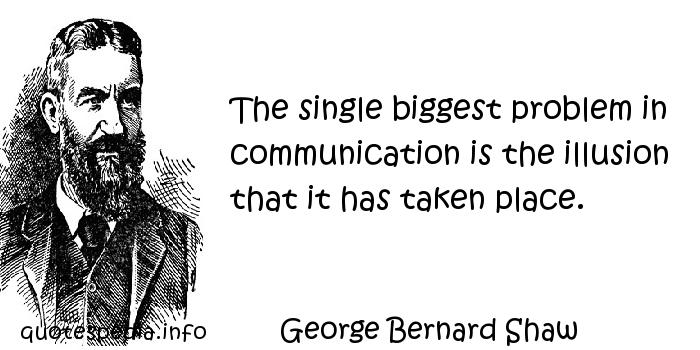
Yeah communication is hard. It’s the process of continually discovering that the person who you think you know might just be someone else. The constant discovery of the old as it reshapes into the new. That little thing that makes misunderstandings just a little less awkward and brings about better companionship.


Maybe, just maybe, if there was better communication the difference between what parents perceive to be their children’s happiness and what actually is their happiness won‘t be so far apart and in the long run that messy hormonal phase won’t be so messy after all as parents finally grow to understand their children just a little better. After all, once a blue moon ago they were those children too.

Saturday, 1 August 2015

The Curro Wave


Why is it, that man is so bent on repeating the mistakes of their predecessors? Are we so obsessed with our history that we would go so far as to repeat it in our actions simply to be closer to it? These are serious questions we must ask as we consider how we move forward in this world that seems to be crumbling as we try to move forward while constantly looking back.


In a recent article I read about the interesting politics of the merger, or rather the attempted merger of Curro holdings and Advtech. Two companies interested in the education sector and building facilities that would better provide the kind of standard education we want our youth to have as opposed to what our government is currently failing to give. Politics aside, the gist of things seem to be that Advtech seem unwilling to jump into bed with the infamous Curro group and it’s hard to blame them when you consider the damage their image suffered with that unfortunate segregation scandal a few months ago.


I find it interesting that a group such as this, an investment firm, who strive to increase their influence as they step into education, might not have alternate motives. Sure maybe their intentions were good, but I can’t blame Advtech for their reservations. The slip up that Curro tries so hard to brush aside as a simple mishap through misunderstanding just doesn’t cut it enough if you take a moment and think about things. Their defence that the children were in fact being segregated by language and not race doesn’t change the fact that they were ‘segregated’ period.


Have these people learned nothing from the past and the damaging consequences of any form of separation? I don’t know what’s worse though, that they might truly believe in this minor separation or that they intend to implement it in the many schools they speak about wanting to open up in their dreams of expansion.


I suppose it’s a good thing to see that some companies like Advtech see the wrong and danger in tying themselves onto a sinking ship like this, but they aren’t the ones we should worry about. The ones we should be concerned about are the companies and groups with money and influence who are willing to push this backwards dream forward. Because then not only does it stop being a sinking ship, it soon becomes a history lesson we are doomed to live through as it rides an unfortunate wave forward and what’s worse, it starts out in the education side of things.

Friday, 17 July 2015

Crazy for Content and the Guide for Common Sense


What is it about this generation and their desire to get the most likes on Instagram? Or if it’s not that it’s about getting the most views on Youtube or some other social media site where they want others to take note of their existence and press that like or heart button until they can’t anymore. I’m not sure I get it, I mean sure it’s nice to share your stuff with the world if your into that sort of thing, but why share it for any validation? Isn’t that putting too much pressure on your life?


In a recent article I read about a man who was being charged for something I think was bound to happen eventually to be honest. In fact, this man probably represents a good chunk of the world that is out searching for something that could give them an edge in the world, you know give them just a little something to put themselves on the map. Though I think this individual might have had an added sociopathic problem to boot as he took his cell phone out in hopes of getting the next viral video and maybe some news coverage.


How the man in question thought it would be okay to approach the scene of an accident where two teenagers had just been in a car crash and film it instead of help the poor souls is something that has to make you wonder about how low our society has fallen into the grips of social entertainment because let’s be honest, despite our surprise and disgust at how the man could do such a thing, you can’t deny the fact that there exists more than enough people out there who want to see that footage, let alone buy it. I suppose there’s comfort to be found in the fact that the police are looking to charge him with trespassing on a crime scene, still I doubt the family of the one deceased child care much. Then again I also suppose I can’t assume that the man’s earlier efforts to help would have made any difference.


It’s funny the lengths people will go to in order to get content to showcase on their social media profiles. The chances people seem to take are bordering on the extreme and nobody seems to want to draw the line anytime soon. Well almost, nobody. Out of all the places in the world who would have thought that Russia would come up with a useful guide that would attempt to at least discourage risky behaviour in the search of the perfect selfie.


What’s sad is the fact that such a guide is even needed. It’s like common sense took an extended vacation as it up and left this generation. I wish I could laugh it off and say we don’t need such a guide because we’re humans, top of the food chain! But the sad truth is that in the last two years alone you could find some of the weirdest and most stupid accidents resulting from people trying to get the perfect selfie.

* Fatal accidents involving selfies*
*Man shoots himself in head after trying to take selfie*
*Pilot selfie crash*
*India train selfie kills three students*
*5 deadly accidents caused by people talking selfies


It takes that whole saying ‘to die for one’s art’ to a whole new level, one I’m not so sure most people even mean to live by and is a ‘selfie’ even considered as art? I mean sure, some guy in New York is technically stealing people’s images, tweaking it a bit and calling it ‘art’ but is it really worth nearly dying or killing over it? These are some serious things to ponder.


I don’t know, maybe I just haven’t felt that special feeling when someone likes the stuff I share, or maybe I need more than one someone to do it, who knows. Personally I don’t see myself hanging from a tree for a like or stripping down for a view, it’s just not my thing but then again I’m just not the type and the world needs and has all types. I just wish all types didn’t have common sense as optional.

Wednesday, 15 July 2015

The Power Struggle - Fighting The Big Stick


The world has become an interesting place, or maybe it has always been like that and all we’re doing is discovery it bit by bit as we advance further and further with things like technology and science leading the way. An interesting thing about technology though is how as we grow as a society more and more dependent on its existence, we see many things that have always been around slowly begin changing. Take for example a simple thing like Power.


Such a thing has existed since the beginning of time, though it has changed forms and been understood in various different ways over the ages, one thing has more or less remained the same and that is that power has been given to those with the ‘bigger stick’ or in today’s terms we could say the ones with the most influence.


Yet as technology grips our society and runs with it, becoming an integral part of it, we see that power suddenly shifts with the times and it’s no longer the guy with the big stick who commands things. In fact, it becomes almost laughable to think that one man with a stick of any size has a right to do any sort of commanding at all once you have technology introduced.


Technology has brought about a form of communication that has effectively transformed the meaning of what defines Power, or at least it has begun to do that. 


In a string of recent articles I found floating about the web I came across something that fascinated me. A group of Kpop fans seemed to be attempting to trend the news of a woman and her two children’s story, which was truly horrific to read through. Through the many links provided I discovered the full story and I have to admit, despite my initial doubts, the story holds quite a surprising amount of possibility in it. Still if it is a scam, which I hope it would be simply because I wouldn’t wish such horror on my worst enemy, it still brings to question many things with regards to how quickly we judge the things the web tells us as well as how horrible we have probably became as humans in this day and age when corruption becomes something we can so blatantly look away from.

*Woman and her two sons begs for help after being forced into prostitution by husband*
*Korean woman makes desperate plea for help after 20 years of sexual slavery at hands of pastor husband and family*

But what’s interesting isn’t so much the story, so much as the call for help from a desperate woman who has taken to the internet in the face of a powerful enemy. This woman, who claims to have almost nothing to her name but the desperate desire to save her two children and give them freedom, has sought out the help from strangers whom she wouldn’t know without the help of technology. Curious, isn’t it?

*Sexual abuse survivor Lee Jung Hee's sons make on-line plea for help*
*Help Lee Jung Lee Updates*

The powerless then suddenly becomes just a little powerful as a few listen to this woman’s plea and heed her call, in however small capacity they can. Already you see the effect this has on others as they try to get the attention of the world as they prompt action to be taken. 

*Timeline of events:...[please refer to the following video]*


It’s interesting to see what will happen with such a standoff as people fight to go against powers higher than them while wielding nothing more than the tools that we currently construct our future with. It would definitely be something to witness the masses change the way power is defined after all these years of the ‘bigger stick’ winning. Something tells me that would be some ground-breaking stuff right there.


Still, it will be a messy process no doubt. No one who has ever had power has given it up easily. Humans are sadly like that. I just hope Lee Jung Hee and her children aren’t the collateral in the process of learning how the new definition of the shifting of power will be. If anything, I hope they become a case study as we evolve with the new way power is defined. Then maybe the world could prove not so gloomy and dark a place as I always imagined it to be.

Saturday, 27 June 2015

Forever People & The Hunger for Social Media


At what point do people become nothing more than just a picture on your Facebook timeline? That is a question I found myself asking a few nights ago as I scrolled through my newsfeed with nothing to do as I tried to get to sleep one evening. On the border of restlessness and sweet ignorant sleep I found myself staring at a few uploaded pictures some of my friends had uploaded innocently sharing their lives with the world. But truthfully I have to wonder if I can even call them my ‘friends’ at this point in my life as I haven’t spoken to or even thought about some of these people in more than a few years aside from this one newsfeed that I tend to check on the rare occasion I actually find my phone near me.


In a society that has made technology so readily available to everyone and information so easily distributed between individuals it comes as no surprise that privacy is one of the many things that has changed with the modern age into something quite different to what it used to be, a thing many still struggle to accept as the years go by and the governments struggle to push their feet further into the door of our own private lives. But staring at these pictures that my past acquaintances and various family members have shared on the many popular media sites that are available to use in today's times I have to wonder, what is privacy and how seriously do we take it?


You may think my two trains of thought are completely separate, but believe me as I contemplated going through the many pictures that were available to me through Facebook and Instagram and whatnot I slowly began to wonder if I wasn’t intruding just a bit into my acquaintances’ private lives with my perusing. After all despite my initial exposure to the picture, I was actively going further into this person’s life to see more of what they shared as I scrolled passively through their feed. In effect, I was ‘Facebook stalking’ these people I could barely call friends, whom I haven’t seen in forever, but still had access to their lives.

It makes me question a lot of things that we share on social media, pictures and life events with the people we’re supposedly close with, how much information are we comfortable with these acquaintances having as we live our lives in front of them?


Of course that’s one part of the argument, another part could be that people have evolved to require just a little less privacy as they integrate with the world so that they are able to feel a part of it. Because what are they, who are they, if they have no footprint in someone else’s life? It’s an interesting question to ponder, for me at least.

Still, what does it take for someone to be more than just a picture on your timeline? That’s a bit of a tough question. My brother had a nice explanation of what those types of people could be called though, Forever People. These people, whom despite being an occasional face on your timeline, also happen to be a constant feature in your daily lives. An interesting concept as you consider that this brings a bit of privacy back into your lives as this close knit group of people become something of a trusted network of individuals you wouldn’t mind living your life in front of. It creates a whole new layer of security as you chose to expose yourself to a certain level of risk on social media by sharing those photos and life events with only those people and as everyone knows the internet is a forever kind of place, so shouldn’t it be a place we’re only willing to share these things with forever kind of people?


Still most people in society these days wouldn’t be satisfied with that. The question of how one expands their social circle and meets new people comes into question and therefore that layer of protection becomes compromised. I think that’s where the rest of the acquaintances come in, the ones you almost remember, but not quite. The friends you had for a moment but then drifted away from. People are innately social creatures and because of this they feel the need to share their experiences beyond their close knit group of forever people and that’s where the growing number of interactions comes from and I think where the opening of the door that governments try to pry their feet into as they try to regulate the flow of such information.

But where do we draw the line?


Some would draw it by the government interference as the shoe steps too far inside our private lives, but by then hasn’t the door been left to open wider by our own social hunger for interaction with the world? Already we have gathered more acquaintances than we can count and forgotten what it is a Forever Person should feel like. We all become solo players out to better number one and watch the world burn around us as we do so, because quite frankly it’s not our problem. Meaningful connection has become lost in the face of over connectedness as people build long lists of expectations harvested from exposure to exaggerated newsfeeds and manipulated social media couple that with the unfortunately shrinking attention spans that comes with every generation you have a disastrous outcome waiting to be let loose on the world behind that door.

It’s a sad thing to wonder on, and all it took was glancing at my Facebook newsfeed and all these photos of the people I really should remember the names of without needing to look at the tags.

Friday, 19 June 2015

A Father in Society: Deadbeat or Dedicated?


As father’s day approaches we get a chance to step back and look at the mysterious figure that many are sadly not very fortunate enough to have with them. Be it through tragedy or plain down human stupidity, the reasons could be endless as to why so many are without them, but the simple fact remains that regardless of whether it was through the natural way or the new-fangled test tube way, everybody everywhere has had the existence of someone they call father in their lives.

But what is a ‘father’?


In a study I recently came across I read how some low-income fathers who more often than not get labelled as the ‘deadbeat dads’ of society, actually spend as much on their children as parents in formal child-support arrangements. The only difference is, instead of cold hard cash given out at a set time these supposed ‘deadbeats’ choose to give goods like food and clothing and maybe the odd gift every now and then. I find this interesting if I had to consider everything from the perspective of a child.


When you’re young, money means next to nothing aside from being that one thing that can get you the cool stuff from the toy store or get you into the arcade. So I imagine it being pretty impersonal as a replacement for a father figure who could do so much by simply being there.


An old article I found highlighted the importance of having a father figure in a child’s life as it reduced delinquency amongst other things. In fact it went so far as to say that the father figure was most likely the most influential parental figure in the child’s life and I have to agree to a certain extent. Where one takes into account the need for a mother’s love and compassion, you cannot ignore the benefits of a father’s authority and command for respect as it shapes the child into whatever human it should grow into.

But in order to exert such influence doesn't it make sense that such a figure first needs to be present beyond the mere support of any financial means? After all respect isn't bought, it's earned through the many soccer games attended and school concerts watched and recorded. The lessons instilled through the formative years that one expects the basic human to have as a common courtesy alone are already the things 'someone' must have taught and re-taught a small child once upon a time. Of course the mother’s role is by no means diminished or marginalized in the grand scheme of things, instead one must understand the gravity of importance the father’s role incorporates as it stands supporting the mother's role and vice versa.


A father who gives money as a means for support or one who gives actual support, I wonder which is more acceptable?

In a society where demands for labour have become harsher and business tougher, it comes as no surprise that the traditional breadwinners of the household have been put under a certain amount of pressure. This pressure has in turn made it more difficult for our fathers to be fathers. It makes it questionable whether society cares for how it wants our little ones to turn out if it takes such an important part of their development and distances it.


Still, can the society be completely blamed for the individual’s flaws? Who knows, I suppose that’s up to the individual to decide or at the very least the children of said individual. Whatever the case may be one thing is clear: a father, regardless of his obligation to society, is someone whom is perceived by children by what they receive from them and as both the study and article show, it would seem that far more is received by the presence of that strong authoritative figure than just a few measly numbers in a bank account.

Thursday, 11 June 2015

Expectation and Reality: The Advice Given to Teenagers


Life is just full of its beautiful contradictions, but ultimately that’s what we love about it. Take for example the youthful generation that we all love to bash every so now and then and how much they ‘don’t listen’ and can be the most rebellious little hormonal creatures that you ever came across and would have rather just bought a dog all those years ago.


Well in a recent article I read, a study was discussed about how, despite popular opinion, the troublemakers of society that make Instagram awkward to browse through may actually ‘listen’ far more than we give them credit for. The study, conducted by researchers from Weill Cornell Medical College, went on to test a selected group of teenagers and adults by completing a behavioural learning game.
 

Basically it had one adolescent listening to two different people, one from their own age group and then another from the adult group each of whom gave them advice and then it was up to the teenager to decide which person’s advice to follow and the results were very fascinating. 

Despite what is obviously expected by both society and the researchers, the teenager followed the advice of the older individual despite the advice being false [though they didn’t know it at the time] and this happened continuously in their research. How interesting, don’t you think?


This draws me to wonder on the many arguments people tend to have about our teenagers today and how they go off the reservation and do their own thing, is that really true? I mean think about it, aren’t we telling these young souls to go out and be who they want to be, make something of themselves and live how they want to live? 


So then, isn’t what we see the result of all that?

What if, and correct me if I’m wrong, our disappointment and dismay as we watch youngsters set themselves on fire for fun or go out and live recklessly because YOLO, what if all this is just because they do not represent what we have envisioned for them? Because let’s be real, we’ve all pictured what the future looks like and it would be a lie to say we don’t expect a certain breed of human to achieve that future. But sometimes expectation and reality don’t always blend very well and the results can be…well, disappointing.

Instead we’re left with a majority of young people more interested in immediate gains to satisfy their dwindling attention span while they expect to be let through the gate of adulthood, because of some strongly misplaced sense of entitlement. It’s a rough reality, but a reality none the less.


What’s worst is that reality is in part to be blamed on the elders that advised the wayward young. The examples they have left behind and the promises they have broken have left the scars that brand these young and shape them, so is it any surprise that they slowly grow to be the way they are?

So what could be a viable solution that exists to fix things before they break so badly that repair becomes nothing but an old man’s whispered dream? Maybe for one we could start by acknowledging the fact that those elders were once young and though their advice may sound great it may not always be right and though the young may still be naïve, they will one day be elders of another time and their advice may actually be worth some salt.